Nasi lemak is widely considered Malaysia’s national dish and is one of the first foods people think of alongside nasi goreng and laksa.
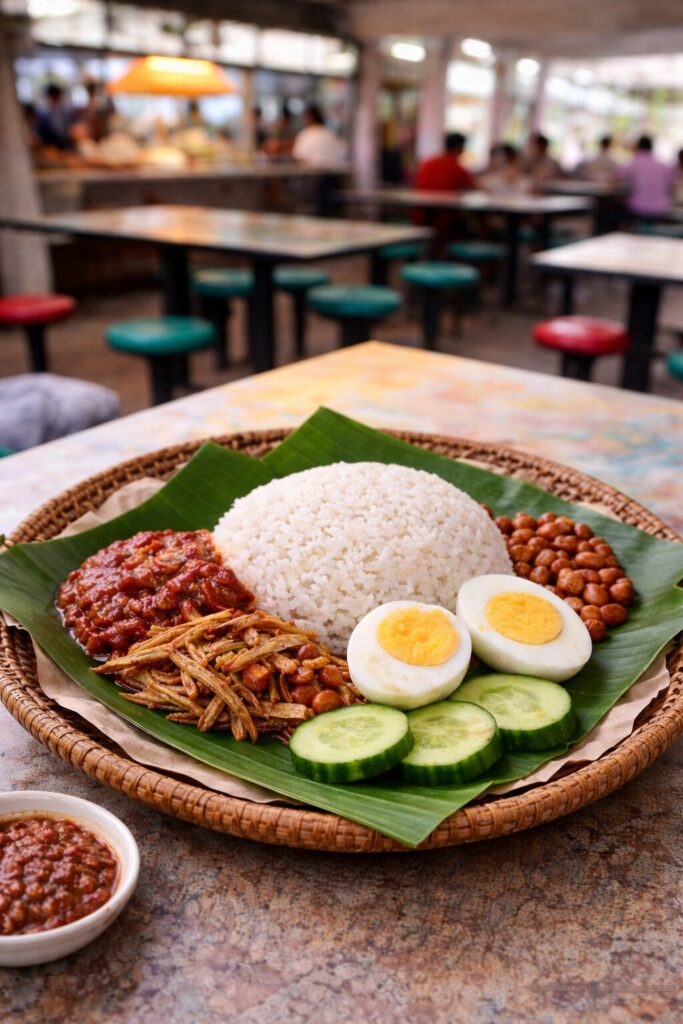
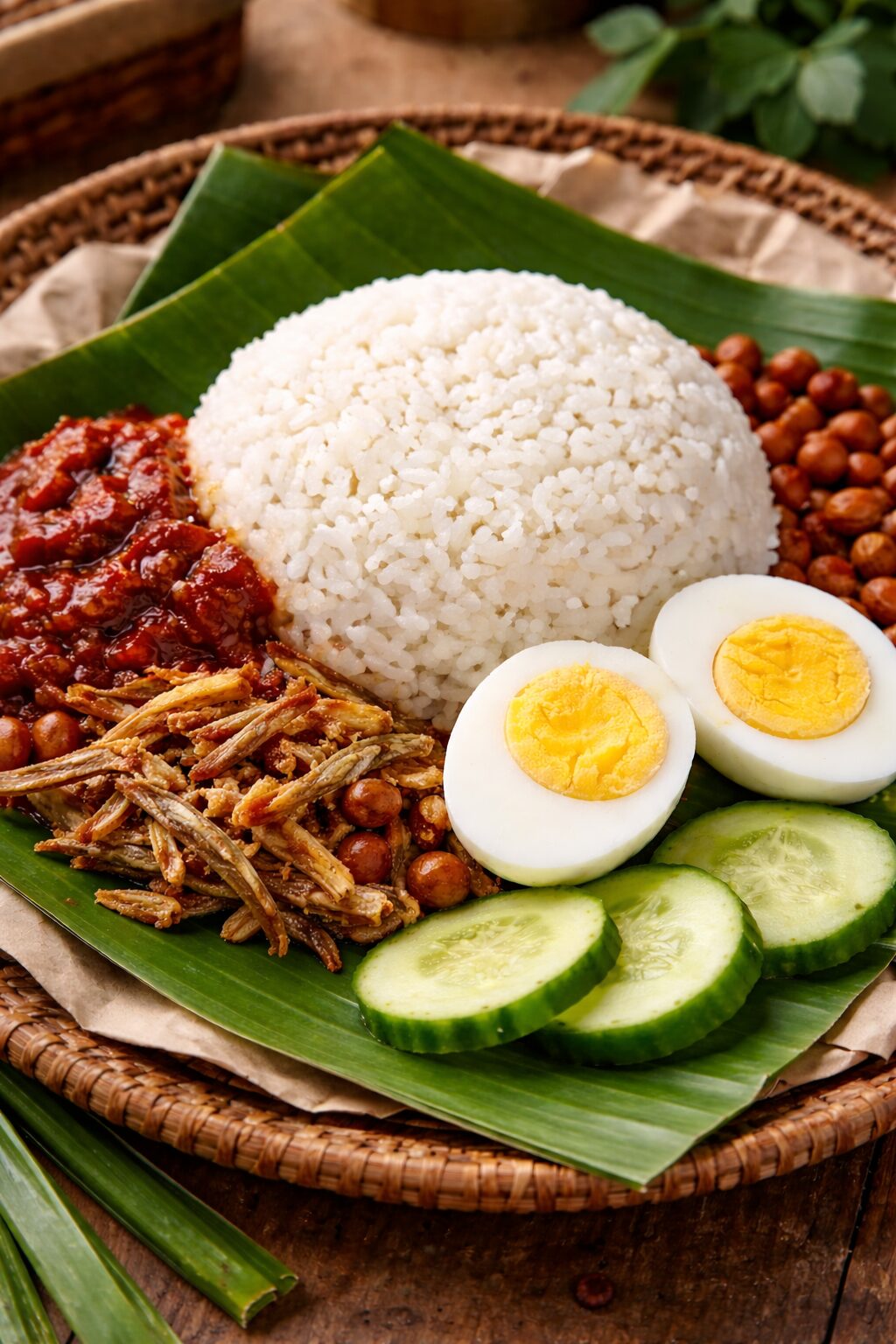
At its core, it’s rice cooked with coconut milk and pandan leaves, served with sambal, crispy anchovies, peanuts, egg and fresh cucumber.
You’ll find it everywhere, from roadside stalls to restaurants, often wrapped in banana leaf for takeaway. It’s traditionally eaten for breakfast, although it now appears throughout the day. When I first tried it in Malaysia, it quickly became something I’d go back for again and again, especially for those crispy anchovies.
What makes nasi lemak stand out is the balance. Fragrant coconut rice sits alongside spicy sambal, salty anchovies and crunchy peanuts. The mix of creamy, spicy and crisp elements is what gives the dish its character.
If you’re exploring Malaysian cooking, you can find more in this Malaysian recipes collection, or try dishes like char kway teow.
What Nasi Lemak Is
Nasi lemak comes from Malay cooking traditions and is eaten across Malaysia, Singapore and parts of Indonesia. It’s often sold by hawker vendors in simple packets containing rice, sambal and a few small side items.
Although it started as a breakfast dish, it’s now eaten at any time of day.
The rice itself is simple, but the dish is built around contrast.
The coconut rice is soft and fragrant, while the sambal adds heat and depth. Anchovies bring saltiness, peanuts add crunch and cucumber helps balance everything out.
It’s not one element that defines the dish, but how they all work together to give Malaysia’s national dish it’s unique appeal.
What It Tastes Like
The coconut rice is lightly rich and aromatic, with a subtle sweetness from the coconut milk.
The sambal adds heat and a savory chili flavor, while the anchovies and peanuts bring salt and texture. Each bite is a mix of soft, spicy, crunchy and fresh.
Key Ingredients
- Jasmine rice: Stays light and separate while absorbing the coconut milk
- Coconut milk: Gives the rice its richness and aroma
- Pandan leaves: Add a subtle floral fragrance
- Sambal: Chili paste that brings heat and depth
- Ikan bilis (anchovies): Fried until crisp for salt and crunch
Ingredient Spotlight: Coconut Milk
Coconut milk defines nasi lemak. It cooks directly with the rice, giving it a rich aroma and soft texture.
It’s used widely in Malaysian cooking, from curries to desserts, but here it’s the main element that sets the dish apart.
Nasi Lemak Condiments Explained
The accompaniments are just as important as the rice itself.
- Sambal: Adds heat, sweetness and depth
- Ikan bilis: Fried anchovies that bring saltiness and crunch
- Peanuts: Roasted for balance and texture
- Egg: Usually hard boiled or fried for richness
- Cucumber: Fresh slices that cut through the stronger flavors
These simple additions turn coconut rice into a complete dish.
Tips for Best Results
- Rinse the rice well: Helps keep the grains separate
- Use pandan if possible: It gives the rice its distinctive aroma
- Balance the sambal: It should have heat, sweetness and savory depth
How to Serve Nasi Lemak
Nasi lemak is often served as a complete plate, but it’s also paired with additional dishes.
Fried chicken is one of the most common additions, along with beef rendang or grilled fish. Many meals include extra sambal on the side, and condiments like sambal belacan will add more heat.
Popular Variations
Although the basic version is simple, many variations exist.
Make it a more filling meal with fried chicken or a beef curry, or pair it with seafood such as grilled fish or sambal prawns.
Each version keeps the coconut rice and sambal as the base.
Nasi Lemak vs Coconut Rice
Many Southeast Asian cuisines have coconut rice dishes, but nasi lemak stands apart because of its accompaniments.
The rice itself is simple, while the surrounding elements create the balance of flavors associated with the dish.
Make Ahead and Storage
Make Ahead: Sambal and peanuts can be prepared in advance and stored separately.
- Fridge: Store rice and sambal for up to 2 days
- Freezer: Coconut rice can be frozen, although the texture softens slightly.
- Reheat: Warm gently with a small splash of water to bring back moisture.
Is Nasi Lemak Spicy?
The rice itself is mild. The heat comes from the sambal.
Some versions are quite spicy, while others are milder or slightly sweet. Because the sambal’s served separately, the spice level can be adjusted. Personally I prefer mine around a mild to medium spice level.
What Does Nasi Lemak Mean?
The name comes from the Malay language. “Nasi” means rice and “lemak” refers to richness.
It describes rice cooked with coconut milk, which gives it its soft texture and fragrance.
Why It’s Malaysia’s National Dish
Nasi lemak is considered Malaysia’s national dish because it appears across the country and is eaten at any time of day.
It reflects the balance of flavors found in Malaysian cooking, combining coconut rice, sambal, anchovies and peanuts into a single dish.
More Malaysian Recipes
You might also enjoy otak-otak, babi pongteh, kari kapitan or roti canai if you want to experience more Malaysian dishes.
Nasi Lemak
Ingredients
- 2 cups (400g) jasmine rice
- 1 cup (240ml) coconut milk
- 1 cup (240ml) water
- 2 pandan leaves, tied into a knot
- ½ cup (75g) roasted peanuts
- ½ cup (50g) dried anchovies
- 4 eggs
- 1 cucumber, sliced
- 2 tablespoons vegetable oil
- 6 dried red chilies, soaked
- 2 cloves garlic
- 1 small shallot
- 1 tablespoon tamarind paste
- 1 tablespoon palm sugar
- 2 tablespoons vegetable oil
- banana leaf squares
- extra sambal
- fried shallots
Method
- Rinse the rice until the water runs mostly clear.
- Combine rice, coconut milk, water and pandan leaves in a saucepan or rice cooker.
- Cook until the rice is tender and fragrant.
- Blend soaked chilies, garlic and shallot to form a paste.
- Heat oil in a small pan and cook the chili paste until aromatic.
- Add tamarind paste and palm sugar and cook until slightly thickened.
- Fry dried anchovies in oil until crisp.
- Cook eggs until firm or soft according to preference.
- Serve coconut rice with sambal, anchovies, peanuts, egg and cucumber.
Notes
- A rice cooker simplifies cooking the coconut rice evenly.
History of Nasi Lemak
Nasi lemak originated in Malay communities along Malaysia’s west coast as a simple meal of coconut rice served with sambal and small side ingredients.
Over time, it became part of Malaysian street food culture, often wrapped in banana leaves for convenient takeaway breakfasts.
Today it appears across Malaysia in many forms, from simple versions to plates served with fried chicken, rendang or seafood.